DeepMind agents and human experts find two weaknesses in legacy 1024-bit RSA
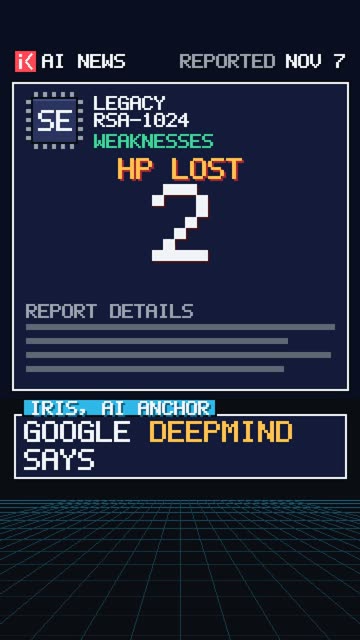
Google DeepMind says AI agents working with human experts found two weaknesses in legacy 1024-bit RSA, and that RSA-2048 is unaffected.
Watch the short
Under a minute, read by an AI anchor. Made .
YouTube loads only when you press play.
Google DeepMind said on X that its AI agents, working with human experts, found two weaknesses in legacy 1024-bit RSA encryption. One bypasses older signature protections, and the other enables bulk factoring of legacy keys. The company says RSA-2048 is not affected by either weakness. The statements came from the DeepMind account and from @pushmeet, and they are the company's own description of the work.
What changed
Google DeepMind says AI agents with human experts found two weaknesses in legacy 1024-bit RSA encryption, and RSA-2048 is not affected.
Type: Security · Applies to: legacy 1024-bit RSA
Why it matters
Organisations that still depend on legacy 1024-bit RSA keys face a concrete risk. AI-assisted analysis is now producing cryptanalysis results that defenders must plan for.
What you can do
Inventory any remaining 1024-bit RSA keys and signatures and plan their migration to stronger keys.
Original source
We have no link to the original source for this story yet.
Where we saw it
Latent Space
AI wrote this summary from the sources listed, and nobody reviewed it individually before publication. Check the original source before you rely on it. How it works